Flu & Covid-19 vaccinations — book your appointment online Book now →
Lyng Pharmacy
Free NHS service

Blood pressure checks,free on the NHS

High blood pressure usually has no symptoms — a free five-minute check at our pharmacy could catch it early. No appointment needed, just walk in.
Get in touch →
Blood pressure check

Checks, monitoring & home testing

Lyng Pharmacy offers free NHS blood pressure checks in West Bromwich for adults aged 40 and over who have not had a pharmacy check in the past five years. Not eligible? Private checks are available to everyone from £5, with 24-hour monitoring and home monitors also on offer — no appointment needed.

NHSFree · Walk-in

Free NHS blood pressure check

A quick, painless check by our pharmacist that could catch hypertension before it causes problems.

  • Adults aged 40 and over
  • Not currently on blood pressure medication
  • No pharmacy BP check in the last 5 years
Private · £5

Private check — £5

Had a pharmacy check within the last 5 years, under 40, or already on BP medication? Get a same-day private check for a fiver — no appointment needed.

  • Anyone, any age — walk in
  • Results and advice on the spot
  • Pay in store — takes 5 minutes
⭐ Most Popular
Private · £50Most accurate

24-hour monitoring (ABPM) — £50

A discreet cuff records your blood pressure over a full day and night — a far more accurate picture than one clinic reading, and the gold standard for confirming hypertension.

  • No referral and no waiting list — book direct with us
  • Fitted in store in minutes, worn for a full 24 hours
  • Full written report, explained by our pharmacist
In-store offer

Take home a clinically validated BP monitor

Check your blood pressure whenever you want, from your own sofa. Our pharmacist sets it up with you, shows you how to take a proper reading, and you can bring your numbers to any review — brilliant alongside medication or just for peace of mind.

  • Clinically validated upper-arm cuff
  • Unlimited checks at home — any time you like
  • Free in-store demo so your readings are accurate
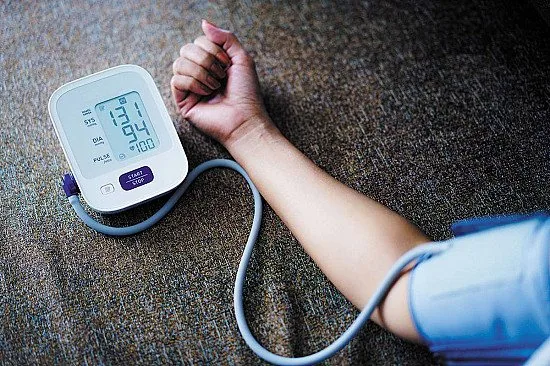
Home blood pressure monitor being used on the arm
£45 one-off
Reserve yours in store →

Pop in or call — we'll have it ready.

High blood pressure, explained

Around a third of UK adults have high blood pressure and millions of them have no idea — because it almost never causes symptoms until it has already done damage. Here's what the numbers mean and what you can do about them.

What is high blood pressure?

Blood pressure is the force your blood puts on the walls of your arteries as your heart pumps it around your body. High blood pressure — hypertension — means that force stays too high for too long, and your heart and blood vessels have to work harder than they should.

It is measured as two numbers in millimetres of mercury (mmHg). The first, systolic, is the pressure as your heart beats. The second, diastolic, is the pressure as your heart relaxes between beats. Left untreated over months and years, raised pressure quietly damages the arteries and raises your risk of a heart attack, stroke, kidney disease and vascular dementia.

The good news: it is easily measured, and in most cases very treatable — often with lifestyle changes alone, and where needed with medication that works well.

You may have high blood pressure if you have:

  • 1
    Headaches that keep coming back, particularly first thing in the morning
  • 2
    Dizziness, light-headedness or a general feeling of being off-colour
  • 3
    Blurred or disturbed vision
  • 4
    Shortness of breath on light activity
  • 5
    Nosebleeds, chest discomfort or a pounding in your chest, neck or ears

Most people have none of these. That is exactly why it is nicknamed the silent killer, and why a five-minute check matters more than waiting to feel unwell.

What your reading means

Lowbelow 90/60
Ideal90/60 – 120/80
Slightly raised120/80 – 140/90
High140/90 or above
Very high180/120 or above

Readings taken at home or over 24 hours run slightly lower than clinic readings, so the home threshold for "high" is around 135/85. If you are over 80, the level at which treatment is usually considered is a little higher again. One raised reading does not mean you have hypertension — nerves and a rushed morning can push it up, which is why we repeat it or offer 24-hour monitoring.

Seek help urgently if a reading is 180/120 or above and you have chest pain, severe headache, breathlessness, weakness on one side or problems with your speech or vision. Call 999. For a very high reading with no symptoms, contact your GP or 111 the same day.
☎ Ask our pharmacist
What causes high blood pressure?
For around nine in ten people there is no single identifiable cause — pressure creeps up over the years under the combined weight of diet, weight, activity levels, alcohol, stress and family history. This is called primary hypertension.

Less commonly it is driven by something specific, which is called secondary hypertension. It tends to appear more suddenly and more severely, and the usual culprits are:
  • Kidney disease
  • Problems with the adrenal or thyroid glands
  • Obstructive sleep apnoea
  • Some medicines — including the combined pill, steroids and regular anti-inflammatories
  • Heavy or long-term alcohol use, and recreational drugs

Bring your medicines in and our pharmacist will happily check whether anything you take could be nudging your numbers up.
Who is most at risk?
Anyone can develop high blood pressure, but your odds go up if you:
  • Are over 40, or have a parent or sibling with hypertension
  • Are of Black African, Black Caribbean or South Asian heritage
  • Carry extra weight, especially around the middle
  • Eat a lot of salt, or not much fruit and veg
  • Smoke, drink above the guidelines, or rarely get moving
  • Sleep badly, or live with long-running stress
  • Are pregnant — blood pressure is monitored closely throughout pregnancy

Two or more of these and it is worth getting checked yearly rather than waiting.
How is a blood pressure check done?
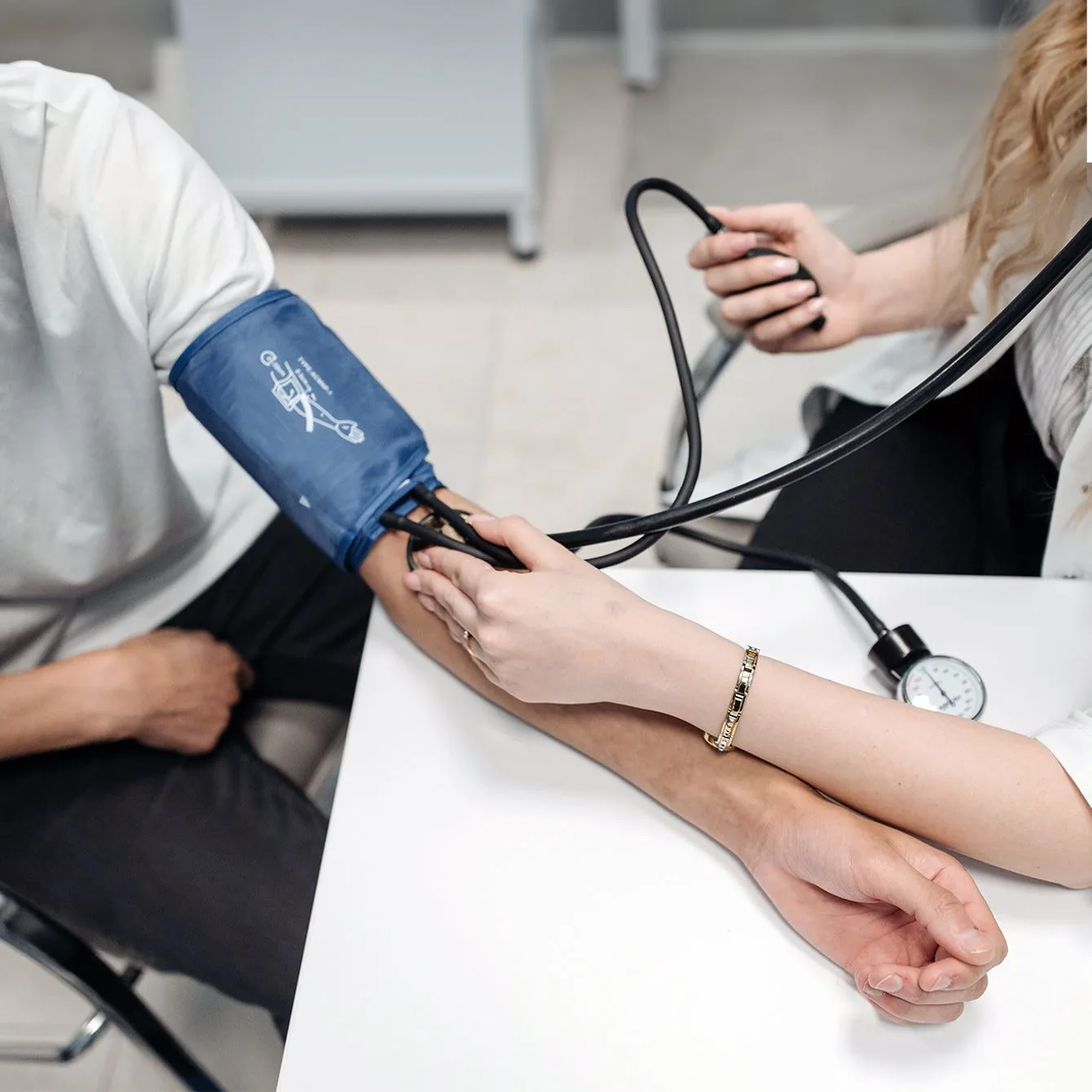
It takes about five minutes and nothing sharp comes near you. You sit quietly for a moment, we wrap a cuff around your upper arm, and it inflates and slowly releases while the monitor reads your systolic and diastolic pressures. You feel a firm squeeze for a few seconds, and that is the whole of it.

We usually take more than one reading in the consultation room, because the first is often the highest. You get your numbers there and then, written down, with an explanation of what they mean and what to do next. If they are raised we can arrange 24-hour monitoring or refer you on to your GP with the readings already in hand.

For the most accurate result, avoid caffeine and smoking for 30 minutes beforehand, empty your bladder, and wear something you can push up past the elbow easily.
How can I lower my blood pressure at home?
Lifestyle changes work, and they work quickly — many people see a meaningful drop within a few weeks:
  • Cut the salt. Aim under 6g a day. Most of it hides in bread, sauces, ready meals and takeaways rather than the salt cellar.
  • Move more. 150 minutes of moderate activity a week — brisk walking counts, and it can take several points off your reading.
  • Lose a little weight if you carry extra. Even a few kilos makes a measurable difference.
  • Keep alcohol within 14 units a week and spread it out, with drink-free days.
  • Stop smoking. Every cigarette spikes your pressure, and quitting cuts your heart risk fast — ask us about support.
  • Sleep and stress. Poor sleep and constant pressure both push your numbers up over time.

Track the effect with a home monitor — we stock a clinically validated one for £45 and set it up with you.
What treatment might my GP prescribe?
If lifestyle changes are not enough, or your reading is high enough to need action straight away, your GP will usually start a blood pressure medicine. Which one depends on your age, ethnicity and any other conditions such as diabetes or kidney disease. The main groups are ACE inhibitors, angiotensin receptor blockers (ARBs), calcium channel blockers, diuretics and, less often now as a first choice, beta blockers.

It is very common to end up on two or even three at low doses rather than one at a high dose — that combination works better and causes fewer side effects. It can take a few adjustments to find the right fit, and that is completely normal, not a sign anything has gone wrong.

Once you are settled, we can dispense your repeats, deliver them free locally, and set them up in weekly trays if remembering them is the hard part. Bring any questions about side effects to us — you do not need an appointment.
What about low blood pressure?
A reading under 90/60 is classed as low. For plenty of people — particularly if you are young, slim or very active — that is simply your normal and needs nothing done about it. It matters when it causes symptoms: feeling faint or dizzy when you stand up, blurred vision, unsteadiness, nausea or actually blacking out.

Causes include dehydration, pregnancy, some medicines (including blood pressure tablets themselves), and occasionally an underlying hormone or heart problem. If you are getting symptoms, come and talk to us — often it is a medicine that needs reviewing, and we can flag it to your GP with the readings to back it up.
How often should I get checked?
If you are over 40 and your last reading was normal, at least every five years — though yearly is better and takes five minutes. If your reading was borderline, if you are in one of the higher-risk groups above, or if you are already on treatment, check more often: yearly at minimum, and at home in between if you have a monitor.

You do not need an appointment with us. Walk in during opening hours and we will fit you in.

Walk in for a free blood pressure check

No appointment needed. Mon–Fri 8:30am–6pm · Sat 9am–1pm. Call us to enquire about 24-hour monitoring.

☎ Call 0121 500 5756
From our health hub
Where to get a blood pressure check in West Bromwich →24-hour monitoring (ABPM) explained →Home blood pressure monitors: a buyer’s guide →
0121 500 5756