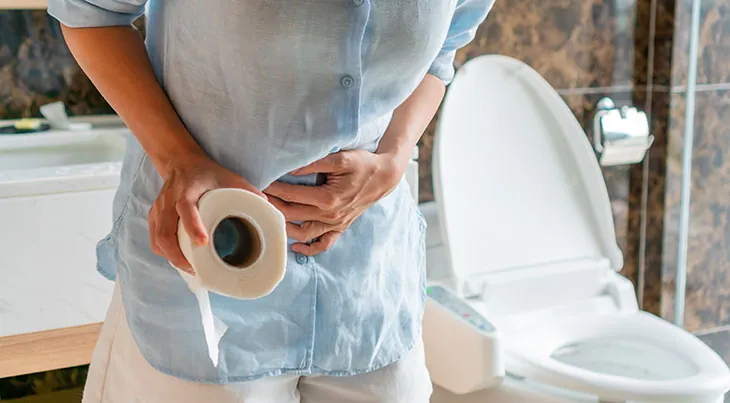
The instinct with diarrhoea is to stop it as quickly as possible, and loperamide does exactly that. But in some situations stopping the gut from clearing an infection is the wrong move, and in a few it is genuinely unsafe. Rehydration is the treatment that always matters; loperamide is the one that sometimes helps.
The real risk from diarrhoea is dehydration, not the diarrhoea itself. Drink plenty of fluid in small, frequent sips — water, squash, or soup. Oral rehydration sachets are worth using for the very young, the elderly, anyone frail, and anyone whose symptoms are heavy, because they replace salts as well as water.
Signs of dehydration to watch for: dark, strong-smelling urine, passing much less urine than usual, dizziness on standing, a dry mouth, and unusual tiredness or confusion. In babies, look for fewer wet nappies, a sunken soft spot, or no tears when crying — and get advice promptly.
Eat when you feel able to. The old advice about avoiding food entirely has fallen away; a normal diet as tolerated helps recovery.
Loperamide slows the gut and reduces the number of trips to the toilet. For an adult with ordinary, short-lived diarrhoea and no fever or blood, it is reasonable — particularly if you need to travel or get through a working day.
Do not take loperamide if you have blood or mucus in your stool, a high temperature, or severe abdominal pain, as these can point to an infection that needs clearing rather than trapping. Avoid it in children under 12 unless a doctor advises it, and check with us if you have inflammatory bowel disease, as it can occasionally cause serious complications.
Never exceed the labelled dose. Very high doses of loperamide can cause dangerous heart rhythm problems.
Most infectious diarrhoea passes on by hand-to-mouth contact. Wash hands thoroughly with soap and water — alcohol gel is not reliable against norovirus. Do not share towels. Clean toilet seats, flush handles and taps regularly while anyone in the house is unwell.
Stay off work, school or nursery until 48 hours after the last episode of diarrhoea or vomiting. That is the standard public health advice and it matters most for anyone working with food, in healthcare, or with young children.
Contact your GP or NHS 111 if you have:
1 Lyng Lane, West Bromwich B70 7RW · Mon–Fri 8:30am–6pm, Sat 9am–1pm · 0121 500 5756
Ask our pharmacist →We use essential cookies to make the site work — things like your basket, sign-in and secure checkout. With your permission we’d also like to use analytics cookies to understand how the site is used and improve it. See our cookie policy.