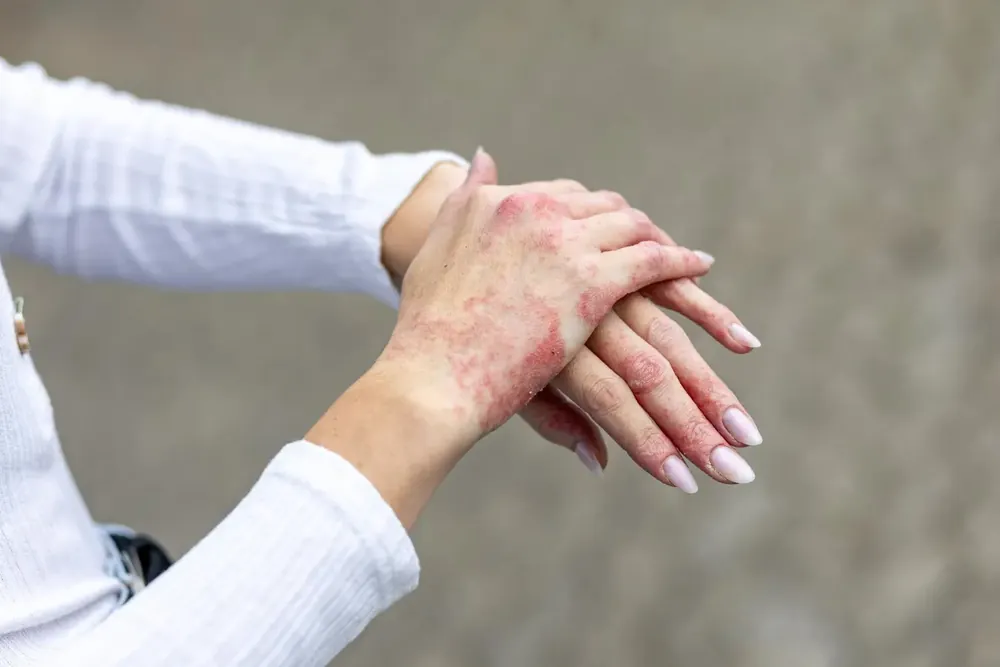
Two things go wrong with eczema treatment more than anything else: people use nowhere near enough emollient, and they use too little steroid cream for too short a time because they are worried about it. Both are fixable, and fixing them usually makes more difference than switching products.
Eczema skin has a leaky barrier. Water escapes, irritants get in, and the skin becomes inflamed. Emollients replace the missing barrier, and they need to be used constantly — including when the skin looks fine.
The quantities are much larger than most people expect. An adult with widespread eczema may need 500g a week; a child around 250g. If a 500g tub is lasting you two months, you are not using enough for it to work.
Apply in the direction hair grows, smoothing rather than rubbing in — rubbing can block hair follicles and cause spots. Reapply at least two to three times a day and after every wash.
Use an emollient as a soap substitute too. Ordinary soaps, bubble baths and shower gels strip the barrier further; a wash product designed for eczema does not.
Topical steroids treat the inflammation that emollients cannot. Used properly, they are safe and effective, and the fear of them causes far more harm than the creams do — undertreated eczema stays inflamed, itches, gets scratched and becomes infected.
The practical rule is the fingertip unit: the amount squeezed from the tip of an adult index finger to the first crease treats an area about the size of two adult palms. Apply once or twice daily to inflamed skin, and keep going until the skin is smooth and the itch has settled — usually a few days beyond the point where it looks better — rather than stopping the moment it improves.
Different strengths suit different places: milder preparations for the face and skin folds, stronger ones for thicker skin like hands. Leave around 20 to 30 minutes between emollient and steroid so one does not dilute the other.
A sedating antihistamine at night can help a child who cannot sleep for scratching, though antihistamines do not treat the eczema itself. Ask us before using one.
Eczema that suddenly worsens may be infected. Look for weeping, golden-yellow crusting, small pus spots, increasing pain, or a temperature — that needs assessing rather than more steroid cream. Widespread painful blisters, particularly with a cold sore in the household, needs urgent same-day attention.
Also see your GP if eczema is not controlled despite proper emollient and steroid use, if it is significantly disturbing sleep, or if it is affecting the face and eyes.
1 Lyng Lane, West Bromwich B70 7RW · Mon–Fri 8:30am–6pm, Sat 9am–1pm · 0121 500 5756
Speak to our pharmacist →We use essential cookies to make the site work — things like your basket, sign-in and secure checkout. With your permission we’d also like to use analytics cookies to understand how the site is used and improve it. See our cookie policy.