Head lice are miserable, mildly embarrassing and completely harmless. They do not carry disease, they are not a sign of dirty hair, and they cannot jump or fly. Almost every failed treatment comes down to one of two things: treating when there were never live lice there, or not repeating the treatment seven days later.
Only treat if you find a living, moving louse. Eggs and empty shells stuck to hair are not proof of an active infestation — they can stay glued there for months after the lice have gone.
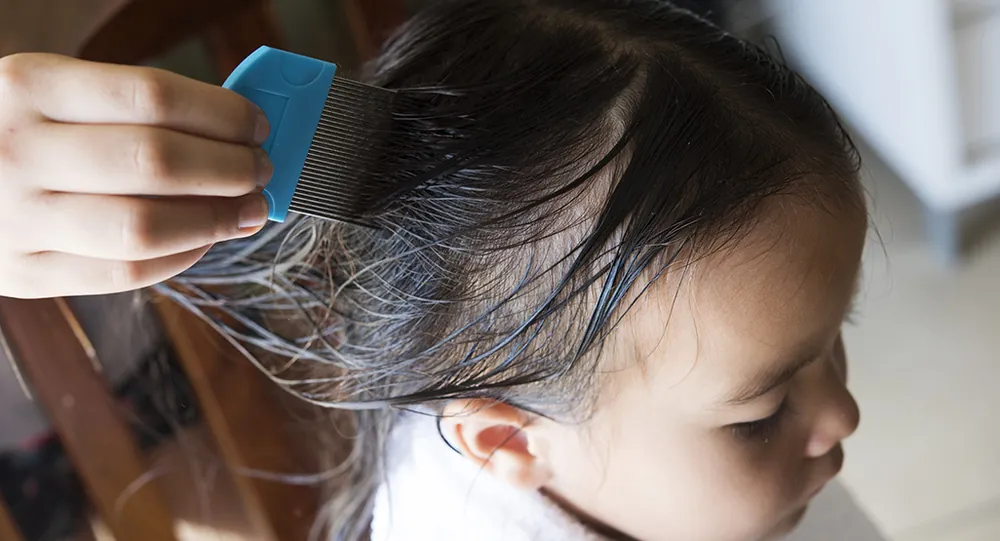
The reliable method is detection combing. Wash the hair, apply plenty of conditioner without rinsing, and comb through section by section with a fine-toothed detection comb from roots to tips, wiping the comb on kitchen paper after each stroke. Check the paper as you go. Do the whole head, then rinse.
Itching is an unreliable guide. It comes from an allergic reaction and can take weeks to develop, or not appear at all.
Wet combing, done properly, clears lice without any chemicals. Comb as described above on days 1, 5, 9 and 13, and then check again on day 17. The schedule matters — it is designed to catch newly hatched lice before they are old enough to lay eggs.
Physical insecticides such as dimeticone and other silicone-based lotions coat and suffocate the lice. They are not affected by insecticide resistance, which is why they have largely replaced older treatments, and are generally suitable for children over six months, in pregnancy and while breastfeeding — check the individual product.
Whichever you choose, repeat after seven days. No treatment kills all the eggs, so a second application catches the lice that hatched after the first. Skipping the second treatment is the single most common reason head lice appear to come back.
There is no evidence for treating the whole household preventively, using electronic combs, tea tree oil, mayonnaise, or leaving products on overnight when the instructions do not say to. Nor is there any need to boil bedding, bag up soft toys or fumigate the house — lice die within a day or so off the head.
Check everyone in the household on the same day and treat only those with live lice. Tell close contacts and the school so others can check too.
Children do not need to stay off school for head lice. Long hair tied back reduces head-to-head contact, which is essentially the only way lice spread. Combs, brushes and hats are a very unlikely route.
If you have treated twice, seven days apart, and are still finding live lice, come and speak to us — it usually means a step in the routine has slipped rather than that the treatment has failed.
1 Lyng Lane, West Bromwich B70 7RW · Mon–Fri 8:30am–6pm, Sat 9am–1pm · 0121 500 5756
Ask our pharmacist →We use essential cookies to make the site work — things like your basket, sign-in and secure checkout. With your permission we’d also like to use analytics cookies to understand how the site is used and improve it. See our cookie policy.