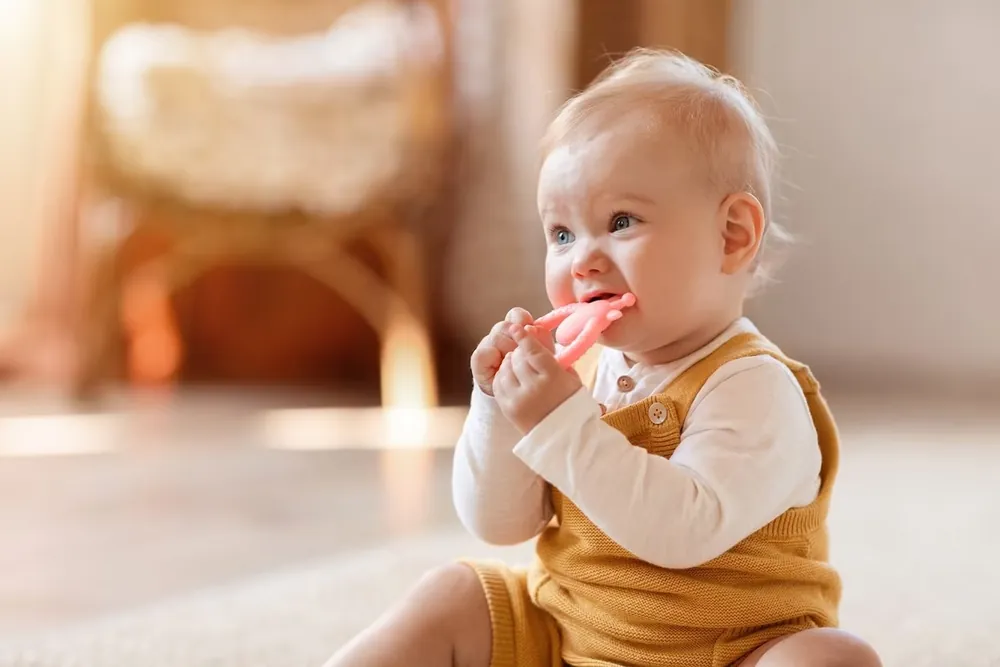
Teething gets blamed for a great deal. Some of it is fair — sore gums, dribbling, a fractious baby who wants to chew everything. Some of it is not, and that matters, because assuming a genuinely unwell baby is just teething is how illness gets missed.
The reliable signs are a red, swollen or sore gum where a tooth is coming through, heavy dribbling, chewing and gnawing on things, flushed cheeks, mild irritability and disturbed sleep. A mildly raised temperature can occur.
What teething does not cause: a fever of 38°C or above, diarrhoea, vomiting, a rash over the body, cough, or a baby who is floppy, unusually drowsy or refusing feeds. If any of those appear, treat the baby as unwell and get advice — do not put it down to teeth.
If your baby is genuinely distressed, sugar-free infant paracetamol or ibuprofen can be used from the appropriate age, following the dosing on the bottle. Paracetamol can be given from two months for teething pain in a baby born after 37 weeks; ibuprofen from three months and 5kg. Ask us if you are unsure which is suitable.
Start brushing as soon as the first tooth appears, twice a day, with a smear of fluoride toothpaste containing at least 1,000ppm fluoride. Register your baby with a dentist — NHS dental care is free for children, and the first visit should be around the time the first tooth arrives.
Avoid sugary drinks in bottles, and move to a free-flow cup from around six months where you can.
1 Lyng Lane, West Bromwich B70 7RW · Mon–Fri 8:30am–6pm, Sat 9am–1pm · 0121 500 5756
Speak to our pharmacist →We use essential cookies to make the site work — things like your basket, sign-in and secure checkout. With your permission we’d also like to use analytics cookies to understand how the site is used and improve it. See our cookie policy.