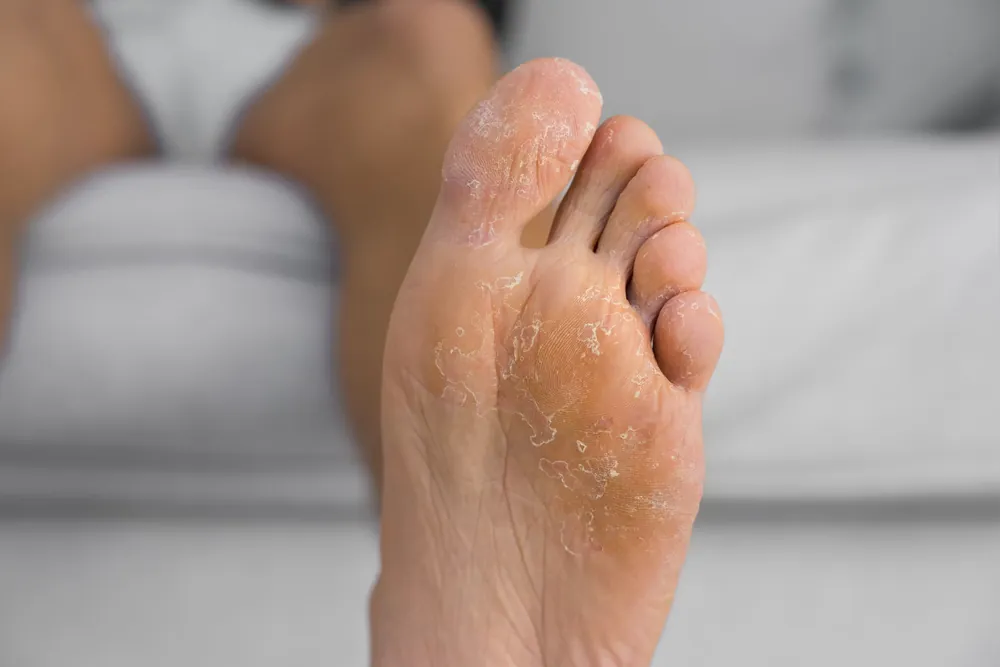
Almost everyone who comes to us about athlete’s foot has had it before. That is the frustrating part — the cream works, the itching stops, and six weeks later it is back. The infection rarely returns because the treatment failed. It returns because it was stopped too early, or because the shoes it came from never changed.
Athlete’s foot is a fungal infection of the skin, usually caused by a group of fungi called dermatophytes. They live happily on warm, damp skin, which is why the web spaces between the fourth and fifth toes are almost always where it starts — that gap stays wet longest after a shower.
Typical signs are itching, flaking or peeling skin, redness, and sometimes small splits between the toes that sting. On the sole it can look like dry, scaly skin rather than anything obviously infected, which is why plenty of people moisturise it for months without getting anywhere.
Antifungal creams are effective in the vast majority of cases. Terbinafine tends to clear things fastest — often within a week — while imidazole creams such as clotrimazole and miconazole usually need up to four weeks. Both work; they just run on different clocks.
The rule that matters more than which cream you pick: keep going for one to two weeks after the skin looks completely normal. The fungus is still present in skin that looks healed. Stopping the day it looks better is the single most common reason athlete’s foot comes straight back.
If the skin is very moist and macerated between the toes, a powder or spray can be easier to use than a cream, and dries the area at the same time.
Treatment clears the infection on your feet. It does nothing about the spores sitting in your trainers, and those will happily reinfect you.
Come and talk to us, or see your GP, if there is no improvement after two weeks of proper treatment, if the foot becomes hot, swollen and painful — which can mean a bacterial infection has taken hold through the cracked skin — or if the infection has spread into the toenails, which turns them thick, yellow and crumbly and needs months of different treatment.
If you have diabetes, do not self-treat broken skin on the feet. Foot infections carry more risk with diabetes and are worth having looked at properly and early.
1 Lyng Lane, West Bromwich B70 7RW · Mon–Fri 8:30am–6pm, Sat 9am–1pm · 0121 500 5756
Ask our pharmacist →We use essential cookies to make the site work — things like your basket, sign-in and secure checkout. With your permission we’d also like to use analytics cookies to understand how the site is used and improve it. See our cookie policy.