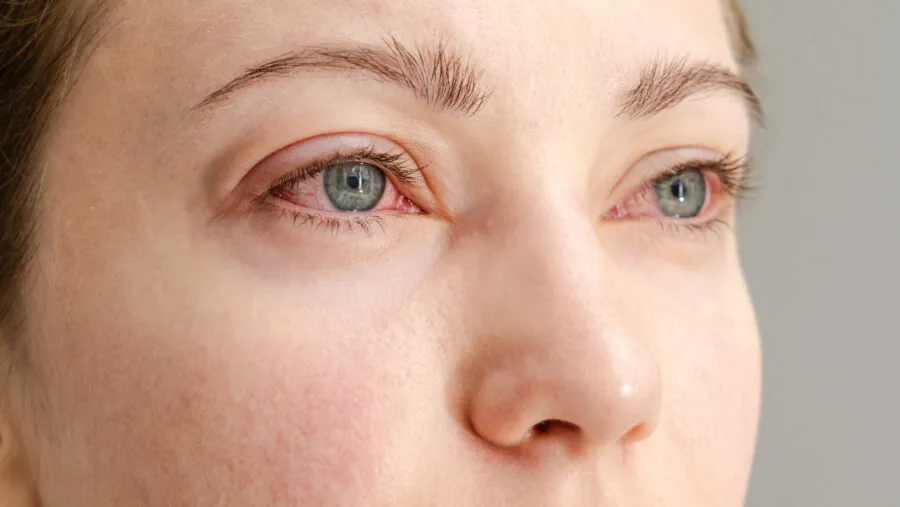
Dry eye is one of those conditions people put up with for years. It gets blamed on tiredness or screens and treated with whatever drops were nearest on the shelf. The treatments genuinely work, but only if the format matches how bad the symptoms are and how often you need them.
Tears are not just water. They have an oily outer layer that stops evaporation, a watery middle layer, and a mucous layer that helps tears stick to the eye. Dry eye happens when you make too few tears, or when the oily layer fails and the tears you make evaporate too fast.
That is why dry eyes often stream. The surface gets irritated, and the eye responds with a flood of watery reflex tears that lack the oily layer and drain straight away. Watering eyes and dry eyes are frequently the same problem.
Common contributors: screen work (you blink around half as often), air conditioning and car heaters, contact lenses, ageing, the menopause, and a long list of medicines including some antihistamines, antidepressants, beta blockers and diuretics.
Drops are thin, comfortable and do not blur vision, but wear off within an hour or two. Fine for mild symptoms or occasional use.
Gels are thicker, last longer, and blur vision briefly on application. Good for moderate symptoms or when drops are not lasting through the day.
Night ointments are thickest of all and blur vision considerably, so they go in at bedtime. Useful if your eyes are worst first thing in the morning, which suggests they are drying out overnight.
If you need drops more than four to six times a day, use preservative-free ones. The preservatives in multi-dose bottles can themselves irritate the eye surface with frequent use. Preservative-free comes in single-use vials or special valve bottles, and is also what to use with contact lenses in.
Give any routine a good six to eight weeks before deciding it has not worked. Dry eye improves slowly.
See an optometrist or GP if your vision is affected, if the eye is painful rather than gritty, if symptoms are not improving after several weeks of treatment, or if there is significant redness, discharge or light sensitivity. Sudden severe dry eye alongside a dry mouth or joint pain is worth mentioning to your GP, as it can point to an underlying condition.
1 Lyng Lane, West Bromwich B70 7RW · Mon–Fri 8:30am–6pm, Sat 9am–1pm · 0121 500 5756
Ask our pharmacist →We use essential cookies to make the site work — things like your basket, sign-in and secure checkout. With your permission we’d also like to use analytics cookies to understand how the site is used and improve it. See our cookie policy.