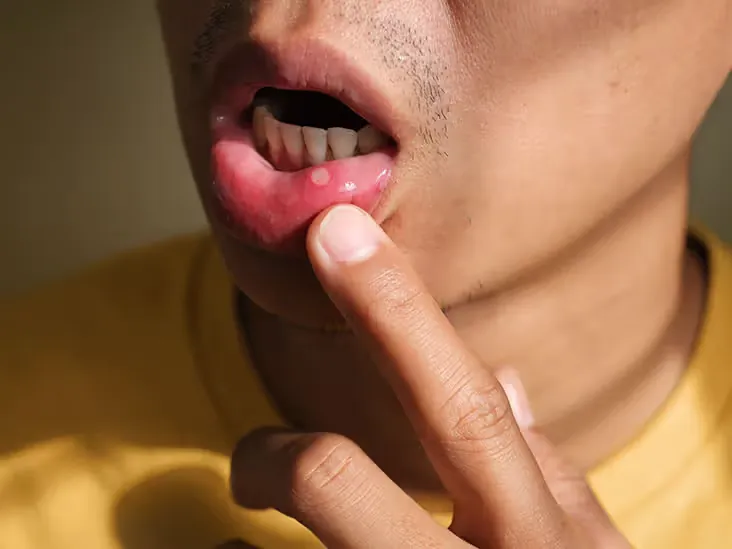
Mouth ulcers are painful out of all proportion to their size, and almost always harmless. There is one rule worth remembering above everything else in this article: an ulcer that has not healed after three weeks needs looking at, however small and however painless.
Most recurrent mouth ulcers have no single cause. Common triggers include biting the inside of the cheek, a sharp tooth or ill-fitting denture rubbing, stress and tiredness, hormonal changes, stopping smoking, and certain foods — chocolate, coffee, tomatoes, citrus and some nuts come up repeatedly.
Sometimes there is an underlying reason worth chasing: iron, vitamin B12 or folate deficiency, coeliac disease, Crohn’s disease, or a reaction to a medicine including some anti-inflammatories and beta blockers. If you get ulcers repeatedly, that is worth mentioning to your GP rather than just treating each one.
Sodium lauryl sulfate, the foaming agent in most toothpastes, is associated with recurrent ulcers in some people. Switching to an SLS-free toothpaste is a cheap experiment worth running if you get them often.
Nothing here makes an ulcer disappear overnight; they take one to two weeks. The aim is to make eating and talking bearable while it heals. Avoid very hot, spicy, acidic or crunchy foods in the meantime, use a soft toothbrush, and keep up brushing — stopping makes things worse.
Some treatments are not suitable for young children or in pregnancy, so ask us rather than picking off the shelf.
Any mouth ulcer that has not healed within three weeks should be examined by a dentist or GP, even if it does not hurt. The same applies to an ulcer that keeps growing, one that bleeds easily, a hard lump in the mouth or neck, a red or white patch that will not go, or persistent difficulty swallowing.
Most of these turn out to be nothing. But mouth cancer is very treatable when caught early and much less so when it is not, and a three-week ulcer is the classic presentation. Your dentist checks for this at routine appointments, which is one good reason to keep them.
See a GP or dentist if ulcers are unusually severe or frequent, if they keep returning in crops, if they come with a fever or feeling generally unwell, or if you have ulcers alongside diarrhoea, unexplained weight loss or a rash elsewhere. Ulcers appearing shortly after starting a new medicine are worth reporting too.
1 Lyng Lane, West Bromwich B70 7RW · Mon–Fri 8:30am–6pm, Sat 9am–1pm · 0121 500 5756
Speak to our pharmacist →We use essential cookies to make the site work — things like your basket, sign-in and secure checkout. With your permission we’d also like to use analytics cookies to understand how the site is used and improve it. See our cookie policy.